Evocons on BBVA: In an interview for Compartiendo Conocimiento, Daniel Lorenzo, founder and CEO of Evocons, discusses how construction digitalisation is moving beyond design and planning. Robotics, artificial intelligence and automation are opening up new possibilities for transforming how construction projects are executed.
Published on 30 September 2026, the interview also features Nélida Pampín, Director of BBVA’s Cruce de Arinaga branch in Gran Canaria. Together, they address some of the construction industry’s most pressing challenges: productivity, skilled labour shortages, sustainability and technology adoption.
The conversation highlights a key differentiator in Evocons’ approach: combining automated precast production with robotic construction directly on site, using its multifunctional robotic technology, EvoConstructor.
Read the original interview on BBVA’s Compartiendo Conocimiento.
Industrialisation Extends to the Construction Site: Evocons on BBVA
The construction industry faces structural challenges relating to productivity, execution costs, the availability of skilled workers and the need to reduce its environmental impact.
Construction industrialisation has enabled progress towards more controlled production processes, particularly through the off-site manufacturing of precast components. However, the industry’s technological transformation does not have to be limited to moving part of the production process into factories.
During the interview, Daniel Lorenzo highlights the importance of introducing technology directly into on-site building operations, integrating data and traceability into construction processes.
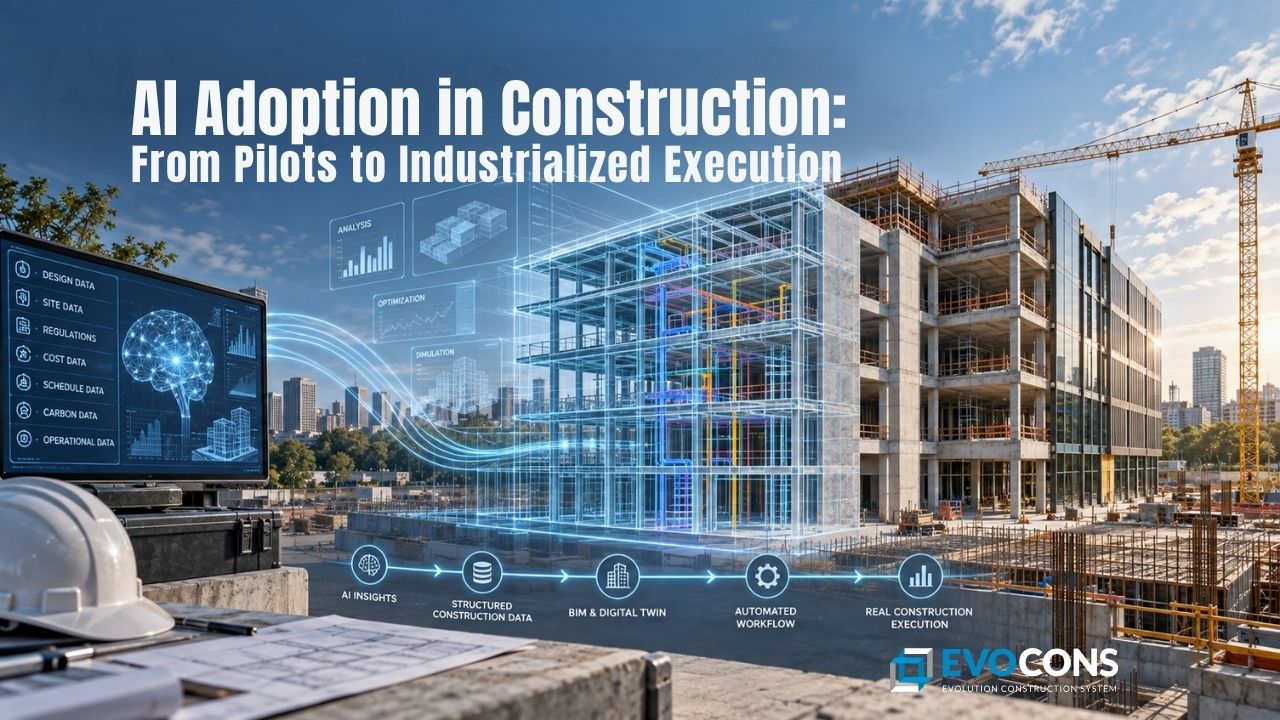
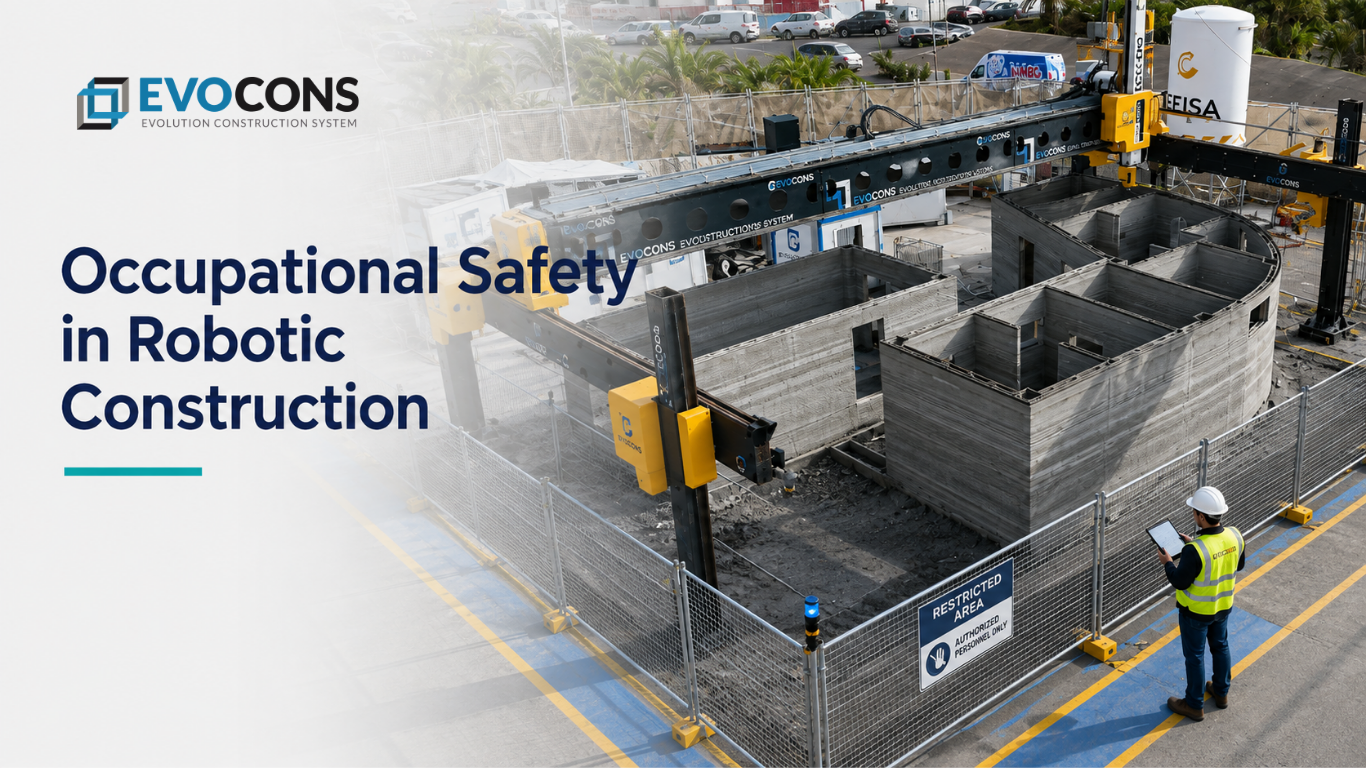
This approach is central to EvoConstructor, Evocons’ multifunctional robotic system, which brings together software, robotics, artificial intelligence and 3D printing to automate different construction operations.
The technology supports two main areas of application:
- Automated on-site construction: the use of robotics to perform operations directly at the construction site.
- Automated precast production: the manufacturing of building components through robotic processes in industrial environments.
This combination opens up new ways to organise production and construction activities, adapting technological applications to the specific needs of contractors, developers and precast manufacturers.
The key differentiator is not simply automating an individual operation, but moving towards processes in which digital information, machinery and physical execution are more closely connected.
Discover EvoConstructor and its applications in construction and precast manufacturing.
EvoConstructor: Robotic Technology Applied to Real Construction Projects
The technology discussed in the Evocons on BBVA interview is already being applied in real-world projects, providing tangible examples of its capabilities.
One of the most representative examples is ECOAGA, a multipurpose building constructed in the Arinaga Industrial Estate in Agüimes, Gran Canaria, which was officially inaugurated on 28 May 2025.
The project was promoted by the Arinaga Industrial Estate Conservation Organisation (ECOAGA), with funding from Agüimes Town Council, and built using EvoConstructor.
The 126.45 m² building integrates multifunctional robotics and 3D printing, achieving an automation level of up to 60% of the construction process, according to the published project information.
ECOAGA provides a real-world reference for automated on-site construction, completed in accordance with the requirements of Spain’s Technical Building Code (Código Técnico de la Edificación).
This project demonstrates that EvoConstructor is a developed robotic technology that has already been applied to the construction of a completed and inaugurated building.
The inauguration also received coverage from national media outlets, including Europa Press, increasing the visibility of the project and its potential applications in the construction sector.
Evocons is currently exploring further opportunities to integrate its robotic system into other construction projects and industrial processes.
For construction professionals, having a completed building as a reference makes it possible to better understand the system’s capabilities and provides a starting point for assessing potential applications within their own operations.
Explore the ECOAGA project and take the 360° virtual tour
Read Europa Press’ coverage of the ECOAGA building inauguration.
New Professional Skills for a More Automated Construction Industry
Another important topic addressed during Evocons on BBVA is how technological adoption is changing professional roles across the construction sector.
As automation becomes more prevalent, technical knowledge and the ability to operate, supervise and manage digitalised processes become increasingly important.
Daniel Lorenzo explains how this evolution could reduce reliance on certain physically demanding tasks while creating new professional opportunities.
He also highlights the potential for technology to encourage greater participation by women in an industry that has traditionally been male-dominated.
Nélida Pampín, meanwhile, emphasises the growing need for specialised and qualified professionals to meet the demands of construction industrialisation.
The technological transformation of construction therefore requires combining advanced equipment with professionals who have the skills to use it effectively, ensuring that human expertise remains central to evolving production processes.
Robotic Construction: Material Efficiency and Environmental Impact
Sustainability is another central theme of the conversation.
During the interview, Daniel Lorenzo explains how automation can help optimise material consumption, reduce waste and limit certain transport requirements associated with construction logistics.
One of the opportunities offered by automated on-site construction is the ability to carry out specific operations directly where they are required, potentially avoiding some of the transport and handling stages involved in other production models.
Lorenzo mentions estimates of up to 90% less waste and approximately 5% lower raw material consumption, depending on the characteristics of the project.
These figures reflect the potential discussed during the interview and should not be interpreted as guaranteed outcomes across all applications.
The actual economic and environmental impact of automation depends on several factors, including design, materials, construction operations, logistics and site-specific conditions.
Assessing its contribution therefore requires analysing each process and establishing appropriate benchmarks.
At Evocons, digitalisation and automation are viewed as tools for advancing towards more efficient construction, with greater control over operations and resource consumption.
BBVA’s Role in Supporting Evocons’ Business Development
The Evocons on BBVA interview also highlights another important aspect of industrial transformation: access to financial resources to develop technologies and bring them to market.
During the conversation, Nélida Pampín explains that technology companies need liquidity to acquire components, manufacture equipment and support different stages of business growth.
Daniel Lorenzo acknowledges the support received from BBVA throughout Evocons’ development and discusses the challenges of introducing advanced technological solutions into a traditionally established industry.
The interview also mentions the possibility of exploring a leasing arrangement to make robotic systems more accessible to potential customers.
This financing option is still under consideration and should not be understood as an established commercial offering.
Collaboration between technology companies, financial institutions and construction industry stakeholders can help facilitate the transition towards more industrialised construction processes.
Technology, financing and the ability to integrate solutions into real projects are complementary factors in advancing the adoption of automation.
Evocons on BBVA: Watch the Full Interview
The Evocons on BBVA interview offers insights into how robotics, artificial intelligence and digitalisation are opening up new possibilities for the construction industry.
Through EvoConstructor and real-world applications such as the ECOAGA project, Evocons demonstrates how automation can be incorporated into construction execution and manufacturing processes.
The conversation between Daniel Lorenzo and Nélida Pampín provides an opportunity to understand both the company’s technological vision and the business challenges involved in developing and commercialising industrial innovation.
We invite you to watch the full interview on Compartiendo Conocimiento and discover EvoConstructor’s role in the transition towards more automated construction.
Watch the full Evocons interview on BBVA’s Compartiendo Conocimiento.
Looking to Introduce Robotic Automation into Your Projects?
The Evocons on BBVA interview raises a question that is particularly relevant to contractors, developers and precast manufacturers: which operations within their processes could benefit from automation?
Every company operates under different requirements, construction methods and business objectives. Evaluating a robotic solution therefore means considering its technical feasibility, operating conditions and potential economic benefits.
At Evocons, we help companies explore EvoConstructor applications, both in automated on-site construction and industrial precast manufacturing.
If your organisation is considering how to integrate robotic technology into its processes, our team can work with you to assess potential applications of the system.
Contact Evocons to explore how EvoConstructor could be integrated into your projects